The Rise of Pseudo-Intellectuals in the Age of Algorithms
On the erosion of intellectualism in an era where algorithms reward confidence over expertise and speed over accuracy
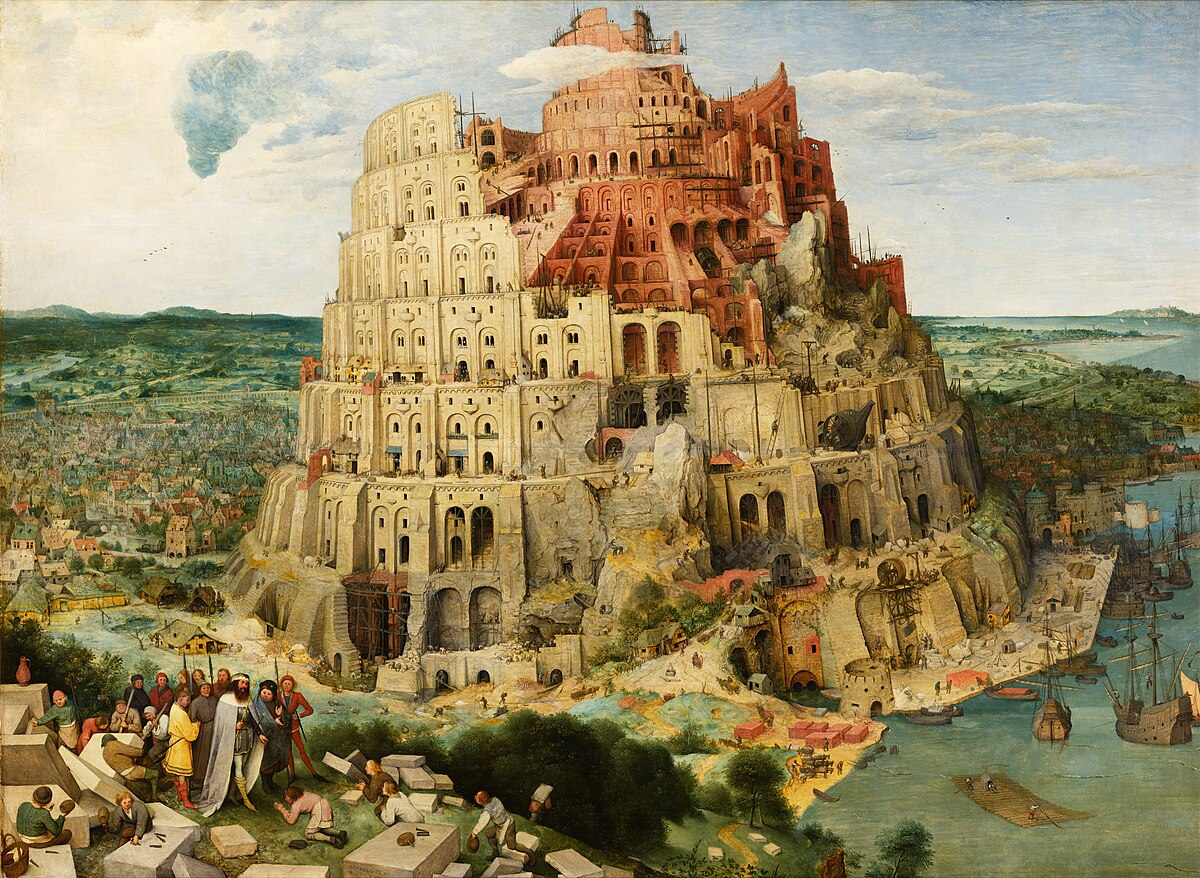
Art credit: Pieter Bruegel the Elder - "The Tower of Babel"
Here I am again, putting words on a screen in an era dominated by 15-second "make a million dollar startup using AI" headlines and get-rich-quick schemes. Writing this, knowing I'm just another person who really likes technology and machines, feels a bit like shouting into a wave of digital gurus and self-proclaimed experts.
Let me start with something positive: the internet is genuinely one of the top five human inventions. It's grand (to borrow some Irish slang). It's the ultimate medium for human connection and knowledge sharing. It made information accessible to everyone, gave a voice to anyone with a browser, and allowed people to express themselves, debate ideas, and challenge established thinking. It's the perfect tool for collaboration, for finding your community, for connecting with the right people to build something meaningful. It's honestly a miracle of human connectivity.
What is an Intellectual?
But before we get too romantic about the web and its democratic promise, let's talk about what an intellectual actually is. The word carries a lot of historical baggage, but I'll stick with the straightforward Cambridge Dictionary definition: a person whose life or work centers around the study or use of ideas, typically through teaching, research, or writing. It's someone engaged in the serious examination and development of thought.
Now, take a hard look at what dominates our feeds today. We've got TikTokers, streamers, podcast hosts, and "billionaire mindset" coaches who can barely read a full paragraph, let alone center their lives around the rigorous study or application of ideas. Their work isn't about deep thinking, it's about turning on a camera and preaching to whoever will listen. The worst offenders are the various coaches (relationship coaches, business coaches, health coaches, life coaches) who borrow the vocabulary and framework of legitimate fields to create an illusion of authority they haven't actually earned.
The New Class: Pseudo-Intellectuals
This is the rise of a new class: the pseudo-intellectuals. These are individuals who present themselves as knowledgeable authorities, but whose claims aren't grounded in genuine scholarly rigor, practical expertise, or careful study. They traffic in half-truths, oversimplifications, logical fallacies, and borrowed credibility. This leads directly to the widespread misinformation and the erosion of trust in traditional sources of knowledge and expertise.
The Uncomfortable Elitism Problem
Here's the uncomfortable part about discussing this topic: it inevitably sounds elitist. The moment you start criticizing pseudo-intellectuals, you risk coming across as a gatekeeper desperately defending old, outdated power structures. You sound like you're arguing that "only people with degrees can have opinions" or that formal credentials are the only path to legitimacy, which absolutely isn't what I'm saying. There's also the obvious hypocrisy I can't ignore, I'm literally writing an essay and posting it online, doing essentially what I'm critiquing. It's incredibly difficult to call out shallow thinking and poor reasoning without seeming like you believe you're intellectually superior to everyone else. This dynamic makes the whole conversation uncomfortable and socially risky, so most thoughtful people just stay quiet and let the noise continue unchallenged.
As a self-taught engineer myself, it feels contradictory, almost hypocritical, to critique others for learning outside traditional channels. I recognize the logical inconsistency here. I've always believed in judging ideas on their merit rather than the credentials of who presents them. A sharp, curious mind with little formal training can absolutely offer a brilliant, unconventional perspective that challenges groupthink and breaks through echo chambers. That kind of fresh thinking is genuinely valuable and necessary.
The Real Problem: Influence and Scale
So what's my actual problem? It's not self-taught people or unconventional thinkers. My problem (my only real problem) is the influence and scale. The noise has become so much louder than the signal that it's drowning out substantive discourse. These pseudo-intellectuals, with their massive platforms and algorithmic advantages, are now setting the intellectual and cultural direction for millions of people. That's where it becomes dangerous.
The Destruction of "The Filter"
To really understand the influence and scope problem, we need to talk about the destruction of what I'll call "the filter." Historically, institutions, universities, academic journals, publishing houses, established media outlets, acted as gatekeepers and bottlenecks. They ensured a certain baseline level of rigor, fact-checking, and peer review before an idea could reach a mass audience. Was this system perfect? Absolutely not. It was slow, often elitist, sometimes corrupt, and frequently exclusionary. But it did demand substance, evidence, and at least some accountability. It created friction that forced ideas to be refined and tested before they reached millions.
Today, that filter is essentially gone. The pseudo-intellectual understands something crucial: the platform itself is now the filter, and platforms reward completely different things. They reward speed over accuracy, emotional resonance over logical coherence, and consistent output over quality of thought. The algorithm doesn't care if your idea is true or well-reasoned, it cares if it generates engagement. This structural reality means that the most simplistic, sensational, and ultimately unexamined ideas aren't just present in the marketplace of ideas, they're winning. They achieve a scale of influence that genuine experts, who are constrained by professional responsibility, accuracy requirements, and intellectual nuance, can never hope to match.
The Fundamental Asymmetry
A real expert might spend months researching before making a claim. A pseudo-intellectual can film a confident-sounding video in five minutes and reach a million people by tomorrow. The system is fundamentally broken in favor of confident ignorance over careful expertise.
So I'm sorry to break it to you, but your favorite podcaster, TikToker, or streamer is not an intellectual. They're just people with a large fanbase and good production skills. The fact that they're in the spotlight, that they have a million followers or a popular show, doesn't give them any legitimate authority to present their particular worldview as the only correct interpretation of reality. Popularity is not the same as truth. Reach is not the same as expertise.
Closing Thoughts
I hope the digital gurus won't shout back at this, though I suspect they won't. Fortunately, reading essays longer than a tweet isn't in their daily schedule, so I'm probably safe.
Cheers.